Journal
When one towel is no longer enough
October 19, 2026 · 5 min
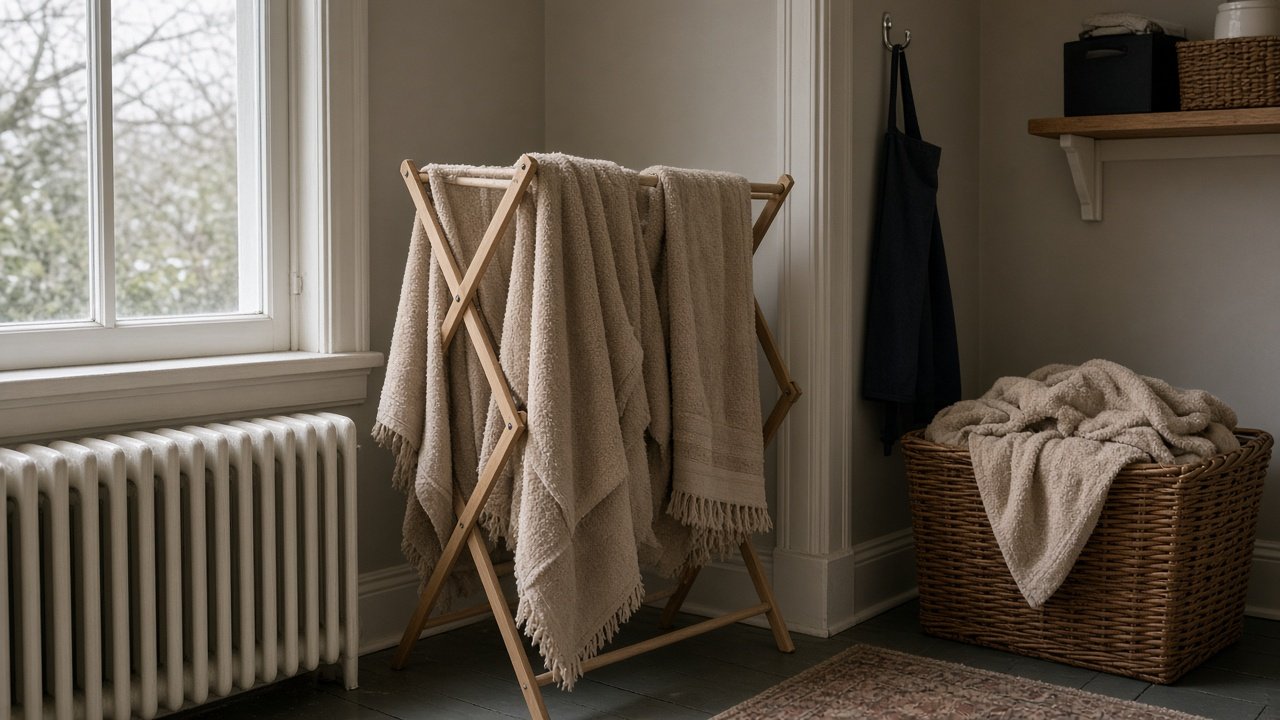
A wet Canadian week uses more than one dog towel. The useful work is rotation: a dry cloth ready, a damp one hung, and a wash before the pile starts to smell. This is laundry, not a new entryway and not a lesson in how to dry the dog.
How you set the square metre at the door — a place to stand, a bowl of plain water — stays with that station note. The order of wiping legs and belly stays with the dry-off note. Here the question is only how cloth moves through a week of rain: enough dry pieces, and a place the wet ones go that is not a heap on the floor.
One walk is one cloth; a week is a small stack
A single towel can finish a single wet return if you hang it open afterward. By the third walk it is still damp in the middle, and it stops taking water off the dog. That is when the hallway begins to smell like a locker. The week does not need a linen closet of gear. It needs enough dry cloth that you are not starting the next walk with yesterday’s wet one.
Count your real loop, not an ideal. Two wet walks a day for four days is eight returns. If a cloth needs a night to dry on a rack, you cannot run that week on one piece. Two or three in rotation is the usual household math. There is no official count. If the cloth in your hand is cool and heavy, it is not the one for this door.
Dry, on the dog, and waiting to dry
Give each cloth a job in time, not a label on a hook. One is dry and at the door. One is in use or just finished. One is hanging or in the machine. When the dry one becomes the finished one, the hanging one should already be close to ready, or you are washing tonight.
A Shore Dry Cloth is one cloth in the Home collection. We do not claim a dry time or an odour rating. A bath towel you already own does the same rotation if you are willing to wash it as often. Do not buy a stack because a journal counted three. Buy a second only if the first is still wet when the next walk starts.
Damp cloth does not live in a pile
A wad on the boot tray is how the entry starts to smell, and how the next person grabs something that cannot dry a dog. Hang the finished cloth open: a rack, a shower rod, the back of a door that gets air. Do not ball it. Do not leave it in a bucket with the muddy water. Spread it so the middle can lose moisture before the next use or the wash.
If the house is closed and cool, hanging may not finish the job overnight. That is a wash sooner, not a scented spray on a sour towel. Smell is the signal that rotation lost. Wash, do not perfume.
The wash is part of the week
Put dog cloths in a load you were already running, or run a small one mid-week if the stack is all damp. Ordinary household wash is enough; this page will not invent a soap or a temperature. Dry them fully before they return to the door. A half-dry cloth folded on a shelf is the pile again, only hidden.
Keep the door hook for the dry one. Washed cloths that are still warm from the machine can wait on a chair for an hour; they should not wait in a plastic bag. If you have no dryer, the same open hang that serves between walks serves after the wash. Plan the wash on the day you can hang, not on the morning you need a dry piece in five minutes.
What this rotation is not
It is not a rebuild of the entry. You do not need a new bowl, a new mat, or a diagram of the metre. It is not a dry-off sequence. You already know to get the wet off the dog; this page assumes that happens and asks what you do with the cloth afterward.
It is not coat care and not a brush lesson. Leaf bits and mats stay with other notes and with the brush guide if you are choosing a tool. A sour towel will not be saved by a comb.
When the week finally dries
On the first clear day, wash whatever is still in rotation and put one dry cloth back at the door. The extras can sit on a shelf. You do not need the full stack in July. You need it in the week when every return is wet. That is the whole method: cloth in motion, not cloth on display.
If you look at the shop, look at Home for a cloth you already lacked — a second piece because the first never dries in time — not for a station kit this article does not sell.
Cloth through the week
- A dry piece at the door before the walk comes back.
- Hang the finished one open, not in a wad.
- Wash when the stack is all damp, or sooner if it smells.
- Return only fully dry cloth to the hook.
- Leave the entry layout and the drying-off order to the notes that own them.