
Journal
Moving a cat for two nights, not a relocation
October 26, 2026 · 6 min
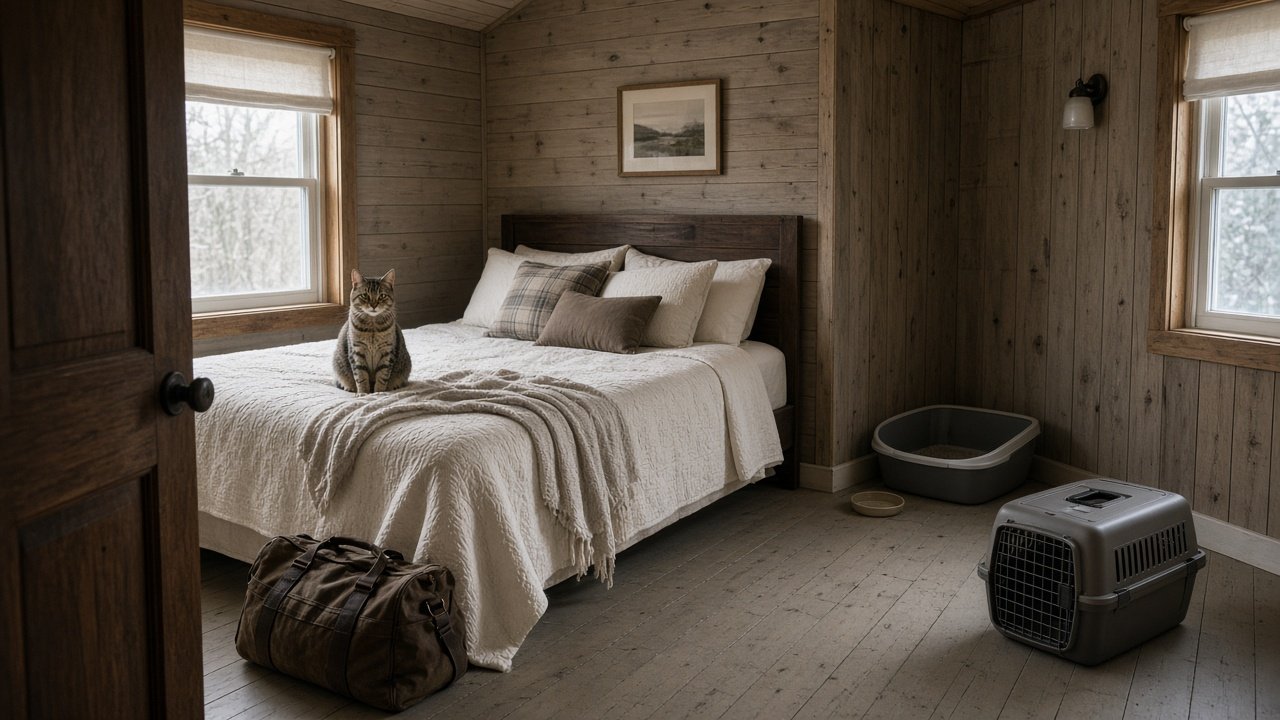
A two-night stay with a cat is a closed room, the litter the cat already uses, and a carrier that has been boring at home. Skipping the trip is a valid choice. Buying a carrier stays with the existing guide.
Canadian weekends away — a cottage, a relative’s house, a rented place with a “pets allowed” line — look short on the calendar. For a cat they are still a move: a car, a new set of smells, a door that is not theirs. Some cats travel as if the carrier were furniture. Many do not. You are allowed to leave the cat at home with a person who already knows the routine, or in the apartment with a sitter, and go without the animal. That is not a failure of planning. It is a decision about the cat you have.
If you do go, do not turn the weekend into a relocation. You need one room that can close, the box and litter the cat already accepts, food that stays yours, and a carrier the cat has already practised. Model shopping — size, zippers, hard against soft — belongs to the cat carrier guide. Habituation at home is a different, earlier job; this page assumes you are deciding about two nights, not about a first chase on Friday at 16:00.
Stay home is a complete plan
Write it down so you do not talk yourself out of it in the driveway. Who opens the door. Who feeds. Where the litter stays. A weekend without the cat in the car is often the kinder weekend. Friends who “love cats” are not automatically a sitter. A person who has already fed this cat on a Tuesday is.
If no person is available and the cat hates the carrier, the trip is the thing that changes, not the cat. Creature & Kin will not talk you into a cottage photo. The Cats collection is household gear, not a reason to travel.
If you go: one room that is actually closed
Choose the room before you leave your own house. A bedroom with a door, not an open loft. A bathroom only if the cat already uses a bathroom at home and the fan will not run all night. Hide the gaps: a window that opens onto a deck, a fireplace, a hole beside a dishwasher in a rental kitchen. The first hour in a new building is when a cat looks for a way under the stove.
Set the room up before you open the carrier. Litter in the place you have already decided, food and water apart from the box, a bed or a towel that smells like home. Then open the door of the carrier and wait. Do not unpack the car while the cat is loose in a hallway they have never seen.
Other animals in a host house are a reason to keep the door closed. A resident dog who “is fine with cats” is still a stranger. The cat does not owe a meeting. Two nights can pass without a living-room introduction.
The box they already know, in the car
A practised carrier is furniture that happens to have a door. If the cat has not sat in it at home, Friday afternoon is a poor classroom. You can still cancel. If you proceed, go slowly, cover what the cat already accepts as a cover, and do not rattle the box as luggage. The carrier guide is where you compare models if the one you own does not close or does not fit the car footwell. This page will not pick a brand.
In the car the carrier is restrained the way you would restrain a bag that must not fly. The car-safety guide is written around dogs; the useful idea for a cat is still that a loose carrier is a projectile. Seat the box so it cannot slide into the footwell on a brake. Do not let a cat free-roam the cabin for “comfort.” Comfort is a closed carrier they know, not a dashboard.
Stops on a two-hour hop are for you. Do not open the carrier in a parking lot to “let them see the trees.” A cat who bolts on a cottage road is not a romantic story. Water and a check of the door latch are enough.
Litter, food, and the host’s house
Bring the litter the cat already uses, in enough quantity for two nights plus a spilled box. A new texture in a new room is how a weekend starts with a mess on a quilt. Scoop as you would at home. Tie the bag and know where the host’s outdoor bin is before you need it.
Food stays yours. A host who offers tuna or milk is being kind and is still wrong. If the cat eats something from a plate, call a veterinarian. People food is not a cottage treat list. Source: ASPCA, People Foods to Avoid Feeding Your Pets.
Plants, lilies, and a garage that smells of antifreeze are host-house problems. Walk the room. Close what you cannot supervise. This is not a toxicology manual; it is a reason to keep the cat in the one room you prepared.
Coming home is still a move
On Sunday the same carrier, the same closed-room logic if you need a pause, the same litter back in its usual corner. Do not throw a party in the hallway. The cat is allowed to be dull for an evening. If something was eaten, if the cat is hiding in a way that is not their usual hide, or if the drive went badly, call a veterinarian. A shop page does not debrief a weekend.
A decision, then a short list
- Decide whether the cat comes. Staying behind is finished planning.
- If they come: a practised carrier — shopping stays in the guide.
- One closable room, set before the carrier opens.
- Known litter, known food, water you can see.
- Carrier shut in the car; no parking-lot tour.
- No mandatory greeting with the host’s animals.


