
Guides
How to choose a dog or cat bed
September 28, 2026 · 2 min · Creature & Kin editorial · Store editorial. Not a veterinarian.
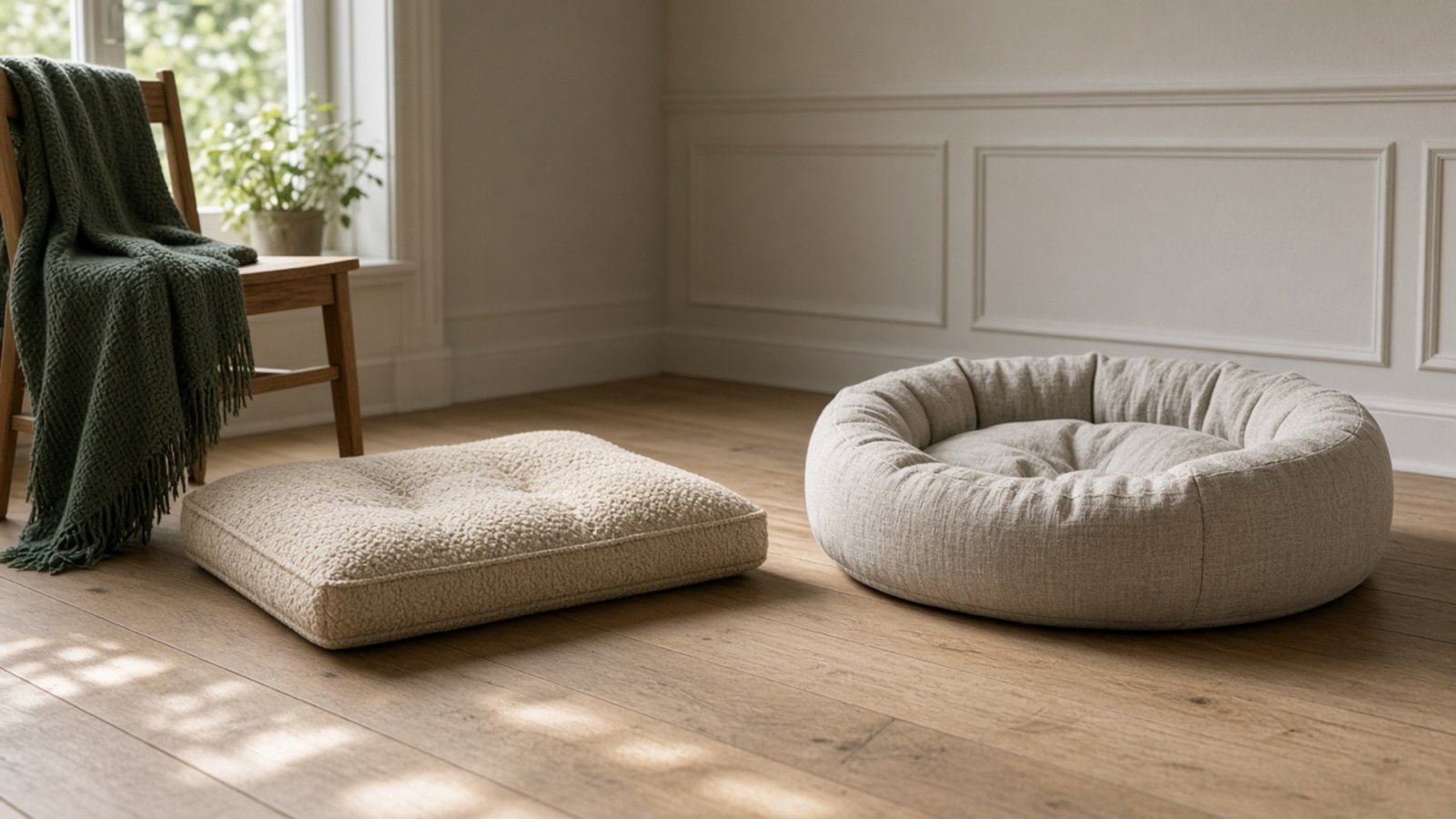
A bed is a surface the animal can lie on. In this shop that surface is a cushion or a lounge filed under beds. It is not an orthopaedic grade, not a cooling rating, and not a medical device. If the product page does not name a fill or a fabric, we do not supply one.
Match the length to the animal, not the breed
Have the dog curl the way they sleep, then measure from the nose to the base of the tail, and across the shoulders. A bed that is shorter than that curl leaves the hips on the floor. A cat usually needs less floor than a dog in the same home, but still compare the cat’s curled length to the dimensions on that product. Standing height is the wrong number. Breed charts are the wrong number. Creature & Kin does not publish one.
What the product page is allowed to tell you
Use the length, width, and height printed on the bed you are reading. Some beds list them. Some do not. A missing number is a missing number. Do not copy centimetres from a different cushion and assume they transfer. Colour is the colour listed. A second colour is a different variant, not a softer bed.
Wash, cover, and the floor
Care instructions are absent on a large part of this catalogue. If the page does not say the cover comes off, or that the bed can be washed, do not treat it as machine-washable. In a Canadian winter the useful habit is a towel at the door so the bed is not the salt trap. That is on winter walking and on living with an animal in an apartment. The bed itself does not solve neighbours, leases, or a slick hallway.
Dog, cat, or both
Many beds here are listed for dogs, some for cats, some for both. Read the animal on the product, not the room you hope to put it in. A bed filed under cats is not automatically a dog bed because a dog might sit on it. If you need a bowl beside it, that is a separate object: a bowl at home or a bowl for the road.