Journal
Keeping a bowl where the dog still passes
October 22, 2026 · 6 min
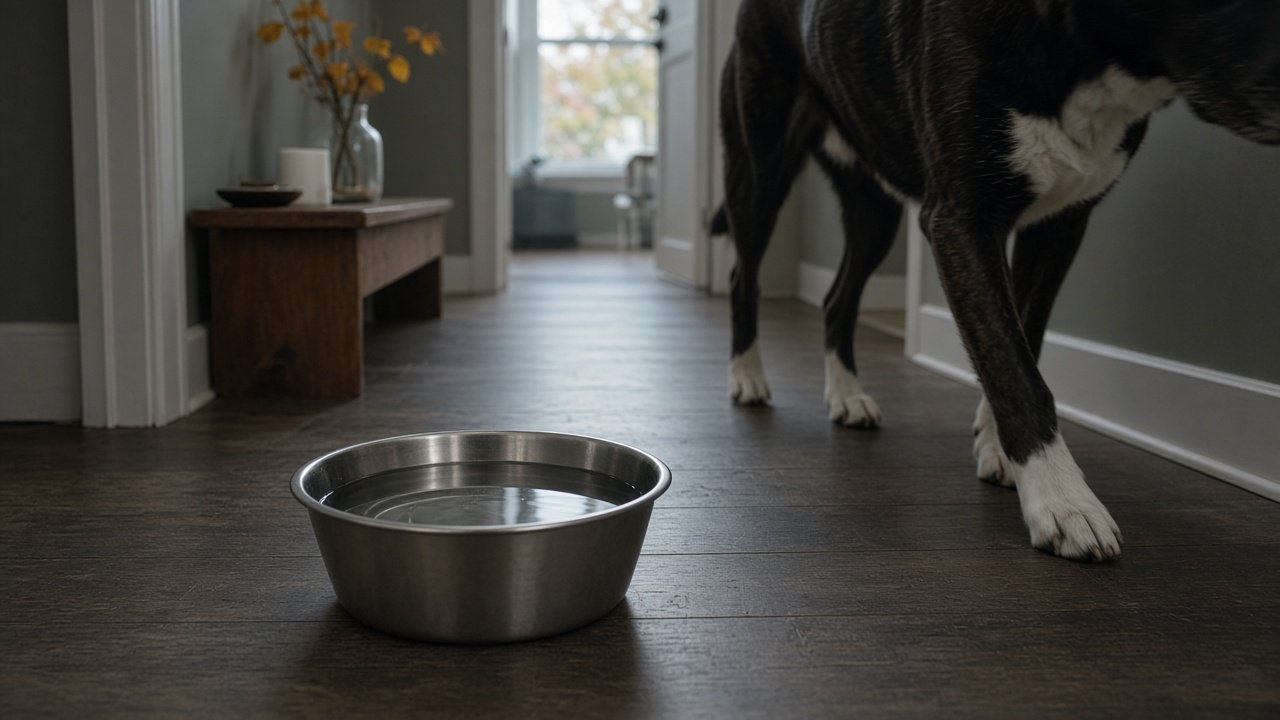
When Canadian houses close up for autumn, indoor water is a placement and freshness problem: a bowl the dog still walks past, emptied and refilled on a boring schedule. This is not a diagnosis of thirst, and it is not water for the walk.
Cooler weeks change the house more than they change the dog’s paperwork. Doors stay shut. The porch is no longer a second living room. A bowl that lived in a sunny corner now sits in a room nobody crosses between breakfast and supper. The water goes stale. Film appears. The dog drinks from a puddle in the bathtub or not at all in that room — and a shop article is not the place to decide what that means medically.
If you are worried about how much a dog is drinking, or about a sudden change, call a veterinarian. Do not use this page to set a volume, a colour, or a “normal for October.” Walk water — a bottle on a longer loop — is a different habit and a different text. Bowl materials and travel bowls stay with the home-or-travel bowl guide.
Put the bowl on a path that still exists
Dogs drink where they already travel. In July that might have been the kitchen, the back door, and a dish on the deck. In late October the deck dish is a mosquito story and the back door is closed. If the only bowl is now behind a chair in a room used for coats, you have hidden the water.
Stand in the house at the hour the dog is usually awake. Watch the line from bed to door to people. The bowl belongs on that line, on a mat or a tray, not as an obstacle in a pinch-point where guests will kick it. A busy kitchen still works if the bowl has a wall at its back and is not in the fridge-door swing. A hallway bowl only works if it is not a trip hazard and not the first thing a guest sets a bag on.
If the household has moved evenings into one room — homework, television, a closed office — consider a second bowl there for the season. Two bowls are a house decision, not a medical protocol. Bring the extra one in from the porch if it is still clean enough; wash it.
Stale water is a chore, not a personality
Indoor air in a closed house is dry and still. Dust settles. A bowl left from Sunday to Wednesday grows a taste the dog will walk past. Refreshing water is closer to emptying the compost pail than to “hydration strategy.” Dump, rinse, refill. If the bowl is slimy, wash it with the dishes. Do not add flavour, ice tricks, or broth from a leftover roast to “encourage” drinking. Holiday food and people scraps are a different risk; if something from a plate is eaten, call a veterinarian or a poison line. Source for foods that do not belong in a dog: ASPCA, People Foods to Avoid Feeding Your Pets.
A stainless or ceramic bowl that already lives in the house is enough. This article will not rank materials. If you are replacing a cracked dish or choosing a travel piece for the car, use the bowl guide and the Bowls collection. The Fold Bowl is a travel piece; it is not a reason to retire the kitchen dish.
Closed rooms change the map
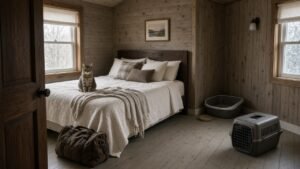
Radiators, space heaters, and a bedroom door that now stays shut all redraw the dog’s indoor map. Water on the far side of a closed door is not water. If you crate or gate a room for guests or for homework, the bowl has to be on the dog’s side of the gate. That sounds obvious the first week and gets forgotten the week the house fills up.
Cats in the same house will drink from a dog bowl if it is easier than their own. That is a placement note, not a feeding lecture. Put the dog’s water where you can still see the surface — you will notice if it is empty, filmed, or full of kibble. Seeing the surface is the whole inspection.
Apartments with one galley kitchen can still keep water obvious. The apartment guide is about living with an animal in a small floor plan; it is not a second copy of this freshness habit. One clear bowl on the only path is enough.
Meals and water are neighbours, not the same job
Food in a walkway becomes a negotiation when the house is full. Water can sit closer to the people path than the meal can, because a bowl of water is less of a resource argument than a bowl of food — until someone kicks it. Keep meals in the quiet corner you already use. Keep water where the dog will find it after the meal and after a nap. Do not stack both jobs on a single mat in a doorway “to save space” if that doorway is now the autumn coat pile.
Pick-up after the meal still matters. Kibble in the water is how a bowl becomes ignored. A thirty-second glance when you put the kettle on is a better schedule than a weekend project.
What this page will not do
It will not tell you that dogs drink less in cool weather, or more, or that a number of millilitres is “fine.” It will not list symptoms. A sudden change, a dog who cannot settle, vomiting, or a belly that looks wrong is a phone call, not a rearrangement of bowls.
It will not pack a bottle for a trail. If you need water that leaves the house, that is a walk or travel decision. Indoor water stays indoor: visible, dumped, refilled.
A house habit you can keep
- Bowl on a path the dog still uses with the doors shut.
- Dump and refill on an ordinary daily pass — kettle, breakfast, last light.
- Wash when the film appears, not when the bowl offends a guest.
- Second bowl only if a closed room has become the evening habitat.
- Worry about drinking itself goes to a veterinarian, not to a shop text.