
Guides
Collar or harness for a dog
September 28, 2026 · 2 min · Creature & Kin editorial · Store editorial. Not a veterinarian.
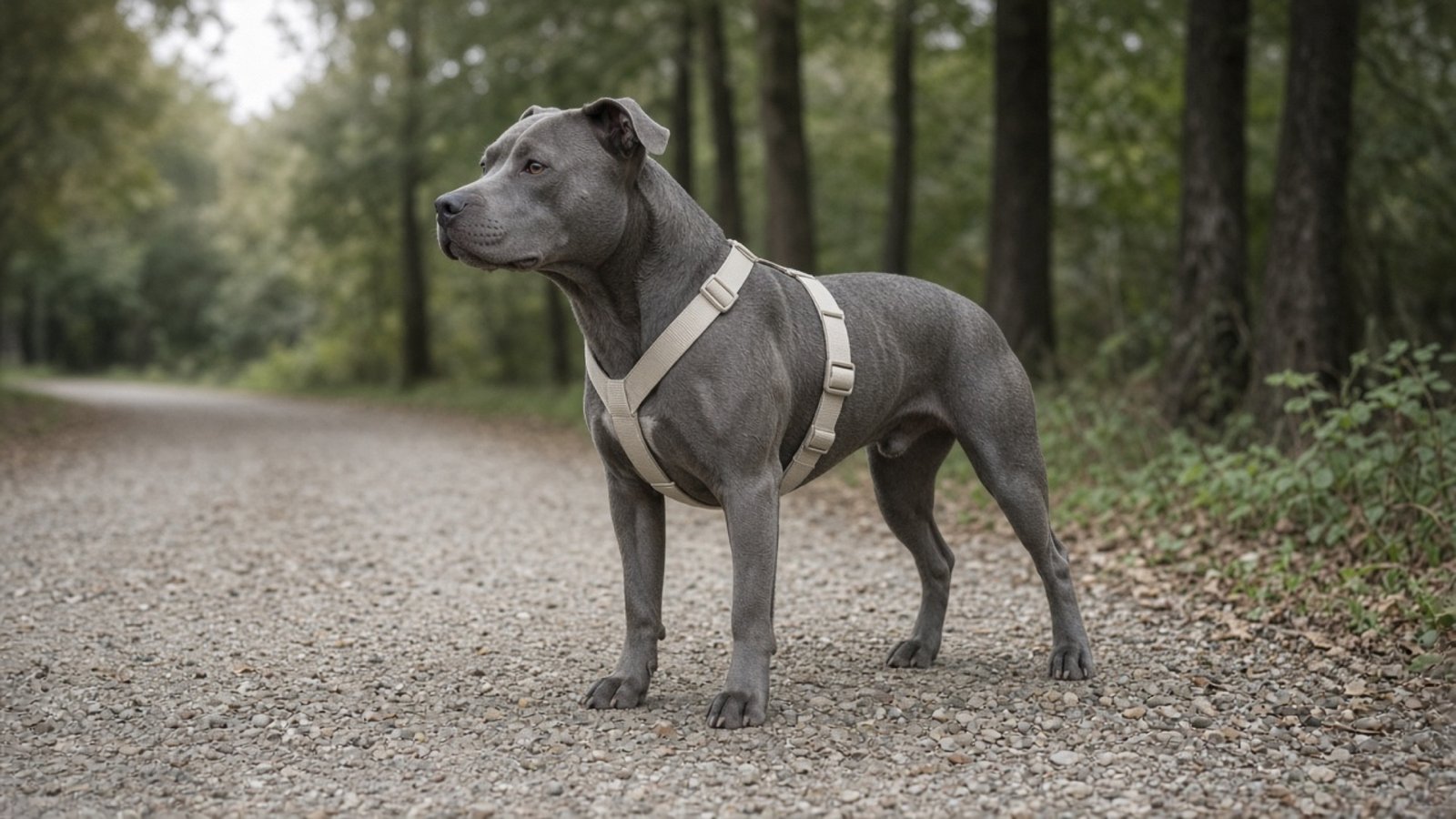
A collar circles the neck. A harness circles the chest and the upper back. The leash clips to a ring on one of them. That is the difference that matters in walk. It is not a diagnosis, and it is not a training method.
Where the pull lands
When the dog moves away from you, the leash tightens. On a collar, that force arrives at the neck. On a harness, it arrives across the chest. People choose a harness when they do not want that force on the neck: a dog who hauls, a small dog, a long walk. People keep a collar when the dog already walks without hauling and they want something that goes on in a second. Both can be true in the same house. A collar left on for a tag, and a harness put on for the leash, is a normal split. We do not require it.
What this is not
We do not sell a promise called no-pull. A harness does not teach a dog to stop pulling. If the dog coughs, limps, or already has a neck or back problem, ask a veterinarian before you change equipment. This page will not name a disease and then sell you out of it.
Fit still decides
A harness that sits on the shoulders or cuts behind the legs is the wrong size, even if a harness was the right type. Measure chest, neck, and back, then read the size note on that product. The steps are how to measure a dog for a harness. Between two sizes, take the larger. A collar should allow two fingers and should not be the thing you are using to stop a dog who already pulls hard.
The leash is a third object
Neither a collar nor a harness is the line in your hand. That is how to choose a dog leash. Clip it to the ring the product actually has. Do not add a ring that is not there.