Journal
A wet dog and a short drive home
October 6, 2026 · 6 min
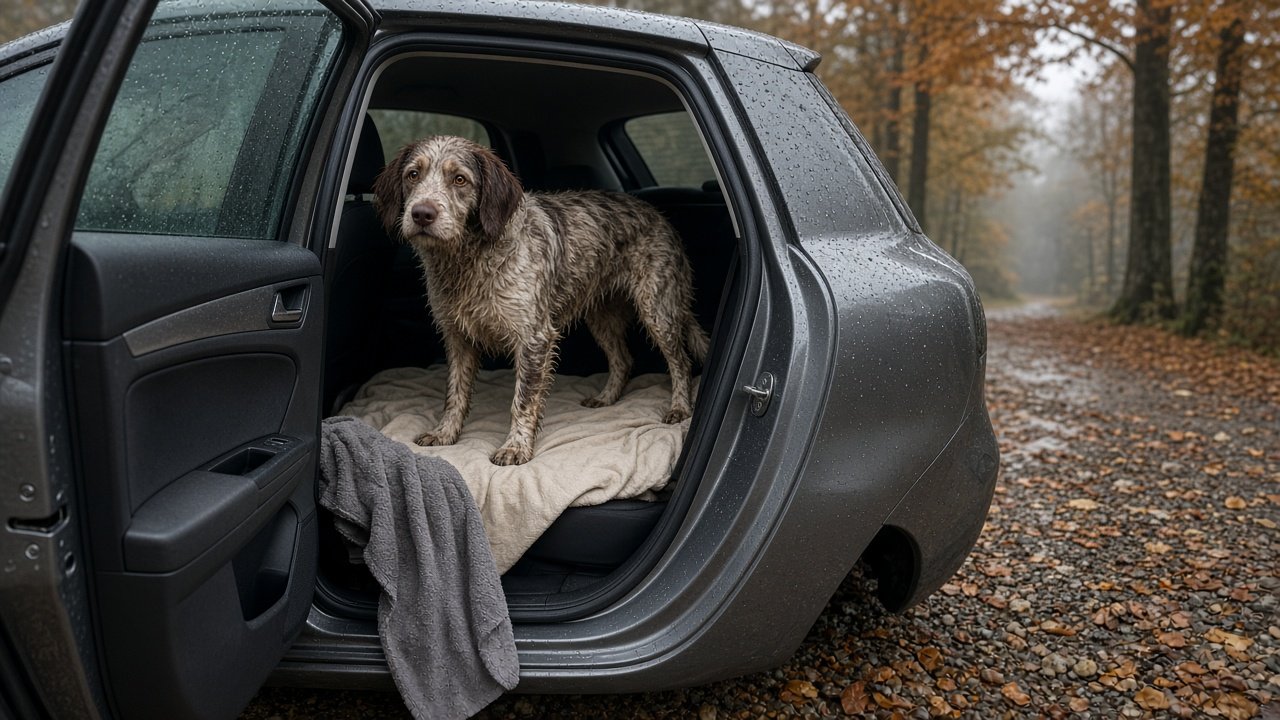
A wet dog and a short drive home are a moisture problem: a layer on the seat, a towel before they sit, and a pause with the doors open. That is not the same work as choosing how the dog is held.
This note is for the ten minutes after a Canadian autumn walk when the dog is still dripping and you still have to get home. It is not a restraint guide and it is not a comparison of bench covers. How a dog is held in a moving car belongs to dog car travel in Canada. Whether a hammock or a booster fits the bench belongs to hammock or booster.
Dry enough to ride is a small job
Rain on a neighbourhood loop leaves water in the coat, grit on the belly, and a wet smell that stays in cloth. If the dog jumps straight onto a bare seat, that water sits in foam. It is still there on Thursday when you drive to work.
You do not need a second walk routine. You need a habit at the hatch or the rear door: wipe the parts that will touch the car, put a layer down if you use one, then close the dog in the way you already do. The wipe is not a bath. Legs, belly, and the underside of the chest do most of the damage. The back can wait until you are in the house.
A cloth you already own is enough for this job. If you keep one in the car, it has to come out to dry. A damp towel left under a seat is how the cabin starts to smell like a locker. The Shore Dry Cloth is one towel in the shop; any plain towel that you will actually wash is the useful object.
The layer comes out again
A removable layer — an old sheet, a towel, a cover you already bought — keeps wet hair off upholstery for an errand-length ride. It only works if you can pull it out at home and hang it. A fitted cover that never leaves the car becomes a wet sponge by the third rainy day.
This is not a decision about hammocks versus boosters. Those are different objects with different jobs, and that split is already written. If you do not yet have a bench setup, read that guide first and come back here for the wet-walk part: wipe, layer, air.
In a hatchback, a plastic tray or a cheap mat in the cargo area is easier to rinse than cloth. In a sedan, the rear bench is the whole story. Either way, the dog still needs to be held the way your car setup already holds them. A wet towel is not a restraint.
A pause before you lock the doors
If the drive is only a few blocks, open a window a crack and leave the heat on the feet, not blasting at the dog’s face. You are moving damp air, not cooking the coat. When you park at home, open both sides for a minute before anyone rushes the hallway. That minute is cheaper than wiping the headliner later.
Shake the dog on the pavement if they will do it, then wipe, then load. Shaking inside the cabin paints the glass. If they will not shake on command, the towel does more work and that is fine.
Do not leave a wet dog closed in a parked car “for a minute” while you duck into a shop. Autumn sun on glass still heats a cabin, and a damp coat does not make that safer. If you have another errand, someone stays with the dog or the dog goes home first.
What stays in the car overnight
A dry spare cloth in a bag is useful. A pile of used towels is not. Take the wet one in with you. If the layer is soaked, it comes in too. A seat that is only slightly marked can wait until morning; a seat that is wet to the touch should be wiped before you go to bed, or the foam holds the smell.
Keep waste bags and a lead where you can reach them without emptying the cabin onto the driveway. The Car collection is for the objects that live in the vehicle. The wet-walk problem is mostly laundry and air, not a new aisle.
If you also keep a travel bowl in the car, empty it. Standing water next to a wet dog is one more thing that tips.
What this note will not decide
It will not tell you which restraint to buy. It will not rate a hammock against a booster. It will not invent a waterproof number for a seat cover. Creature & Kin does not publish those tests.
A dog who is shivering, vomiting, or not bearing weight on a paw after a wet walk is a veterinary question, not a cabin-care question. Dry the dog at home and call a veterinarian if something is wrong. Do not treat that from a shop article.
Longer days on the road — water stops, overnight bags, a week of packing — belong to what to pack for a dog on the road. A wet Tuesday in October is not that trip.
A return sequence that fits a Tuesday
- On the pavement: a shake if they will, then a towel on legs and belly.
- Layer down if you use one. Load the dog the way you already restrain them.
- Crack a window. Drive home. Do not add a shop stop with a wet dog closed in the car.
- Doors open for a minute. Dog out. Wet cloth and wet layer come inside.
- Hang the cloth. Leave the cabin door ajar in a garage if you have one, or wipe the seat if it is wet to the touch.
If that sequence feels like too many steps, drop the optional ones. The two that matter are the wipe before they sit and the wet cloth leaving the car.
Mistakes that keep the smell
- Loading a dripping dog onto bare foam “because it is only five minutes.”
- Leaving the same towel under the seat all week.
- Using a bench cover as if it were a crash restraint.
- Closing the car immediately and running the heat on the dog’s face.
- Treating a wet walk home as a reason to reopen the whole car-safety decision.
If you look at the shop afterwards
Start with a cloth you will wash, not with a new restraint. Car objects live in Car. Travel odds and ends live in Travel. How the dog is held, and which bench product fits, stay on the two guides named above.