Journal
A carrier that already lives in the room
October 10, 2026 · 5 min
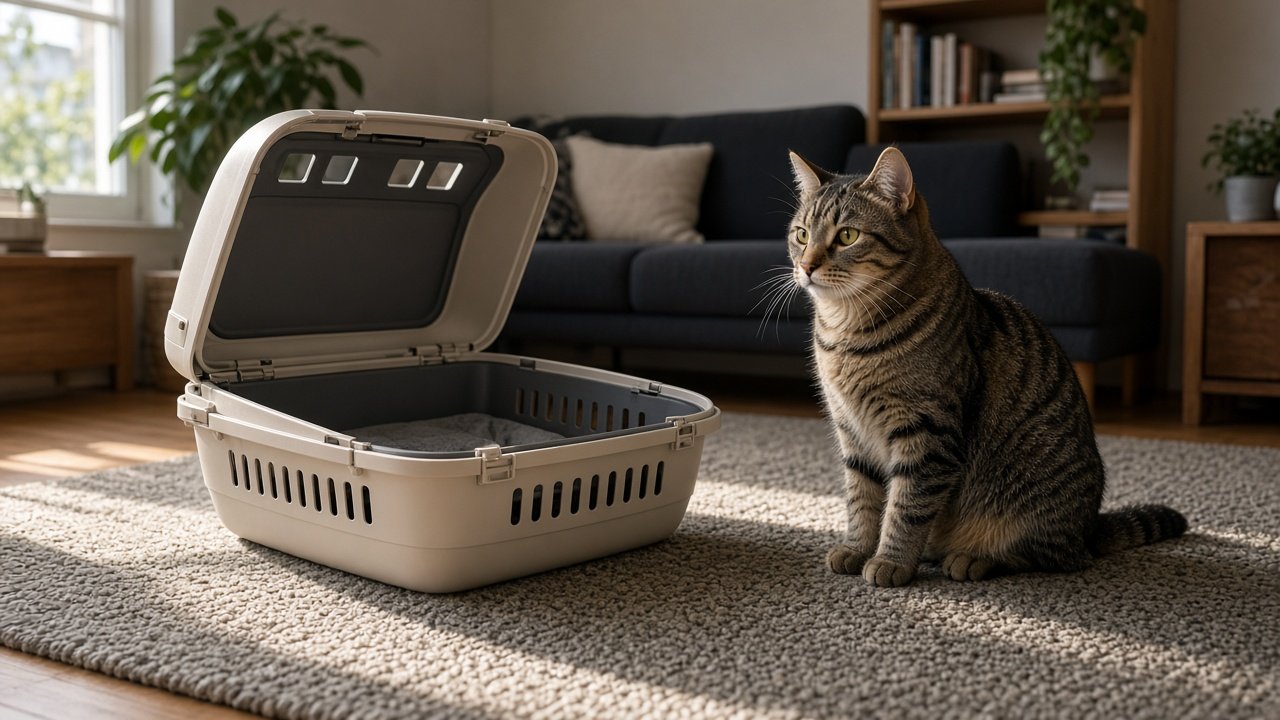
The useful work with a cat carrier is weeks of boredom in the room, food near the open door, and no chase on the day you need it. Choosing a model is a different page.
This note is habituation in a Canadian home — apartment or house — before a clinic visit, a move, or a weekend you have already decided to take. Soft or hard, top load or front: that decision stays with how to choose a cat carrier. If you do not yet own a box that closes, read that guide first. This page will not replace it.
Leave the box where the cat already walks
A carrier that lives in a closet is a trap that appears twice a year. Set it out in a room the cat already uses, door off or tied open, nothing blocking the entrance. Under a console, beside the radiator they already seek, at the end of a sofa run — places that are ordinary, not a spotlight in the middle of the floor.
If the cat ignores it for a week, that is success. Ignore is better than a stare from under the bed. Do not rattle toys at the door to “make it fun.” Boredom is the point.
Wash a dirty carrier before this starts. A box that still smells like the last clinic visit is not a blank object. If you cannot get the smell out, that is a reason to look at a different carrier on the choose page, not a reason to force this one with treats.
Food near the door, not a bait-and-switch
Start with meals or a few pieces of the usual food on a plate in front of the opening, then on the threshold, then just inside. The cat should be able to back out. Closing the door on the first inside bite is how the box becomes a story they remember.
If they will not eat near it, move the plate farther away and wait days, not minutes. Cats who were stuffed into a carrier as kittens often need more distance at first. That is information. It is not a diagnosis, and this page will not offer one.
A towel or a piece of bedding that already smells like their rest spot can live in the carrier once they are stepping in. Do not buy a new cushion for the project. One familiar cloth is enough.
Closing without a hunt
When they will sit inside with the door still open, close it for a few seconds while you are in the room, then open it and walk away. No parade to the car. No celebration that revs the house. The close is a fact, like a cupboard.
If you miss and they bolt, stop. Do not follow under the bed. Put the carrier back in its boring place and return to open-door meals the next day. A chase trains the chase.
On a real appointment morning, set the carrier out the night before in the same spot. Do not assemble it in front of them at 7 a.m. If they will not walk in, a towel wrap and a top-load, if your carrier allows it, is calmer than grabbing legs in a hallway. How a lid works is part of choosing a carrier; if yours only loads from the front and the cat will not enter, that is a fit problem for the guide, not a tougher wrestle.
Minutes in the box, then the hallway, then the car
After short closes in the room, carry the closed carrier to the hallway and set it down. Open. Done. Another day, as far as the building door. Another day, into the parked car, engine off, then back inside. The cat is practising the sequence, not “loving travel.”
Do not stack a first car ride, a first clinic, and a first close on the same morning if you can avoid it. One new piece at a time is slower and more repeatable.
A dog carrier is a different object. If you also have a dog, do not borrow the dog bag for the cat and call it practice. Cat carriers are in Cats; a dog bag is a separate choice on how to choose a dog carrier.
This page does not pick a model
Hard-sided, soft-sided, size, a door on the top, a seat-belt slot — those questions are already written. Creature & Kin does not publish a “most trusted” carrier or a crash figure for a cat box. We will not invent one here to finish the sentence.
Practice does not fix a carrier that is too small, that collapses when lifted, or that the cat cannot turn around in. If the box you have is the wrong object, stop practising and go back to choose a cat carrier. Habituation is for a box that already fits the job.
Skipping a trip is allowed. A cat who is not ready for a cottage weekend can stay home with someone who already cares for them. Forcing the car because the booking exists is how the next clinic visit starts in the same hole.
What restarts the fear
- Storing the carrier so it only appears on appointment day.
- Closing the door on the first curious step inside.
- Chasing the cat from under the bed with the box as a net.
- Washing their familiar cloth in a heavy scent the night before a visit.
- Using practice as a reason not to read the choose-a-carrier guide when the box is simply wrong.
If you look at the shop afterwards
Look at Cats only after you know what kind of carrier you need. The choose guide is the fit note. This journal page is the weeks of leaving it out.