Journal
A dog in a house that is not yours
October 7, 2026 · 6 min
A dog in someone else’s house needs a known rest spot, a lead at the door, and food that stays yours. The useful work is etiquette in a house you do not run, not a week of road-trip packing.
This is for an afternoon or a night or two with family in Canada — a sibling’s place in town, a parent’s bungalow, a friend’s condo. It is not a packing list for days on the highway. That bag lives on what to pack for a dog on the road.
Ask before the dog is in the hallway
Call before you leave. Confirm the dog is welcome, whether another animal lives there, and whether anyone in the house is uncomfortable with dogs. A “sure, bring them” said three weeks ago can change when a guest with allergies arrives. You want that news in the driveway, not at the door with a leash in your hand.
Ask where the dog may sleep, which rooms are closed, and whether the yard is fenced in a way you actually trust. Many Canadian host yards are decorative, not secure. A lead at the back door is still the plan unless you have walked the fence yourself.
If the answer is no, leave the dog at home with someone who already knows them, or skip the visit. That is a complete decision. Do not talk a reluctant host into it on the stoop.
Bring the rest they already use
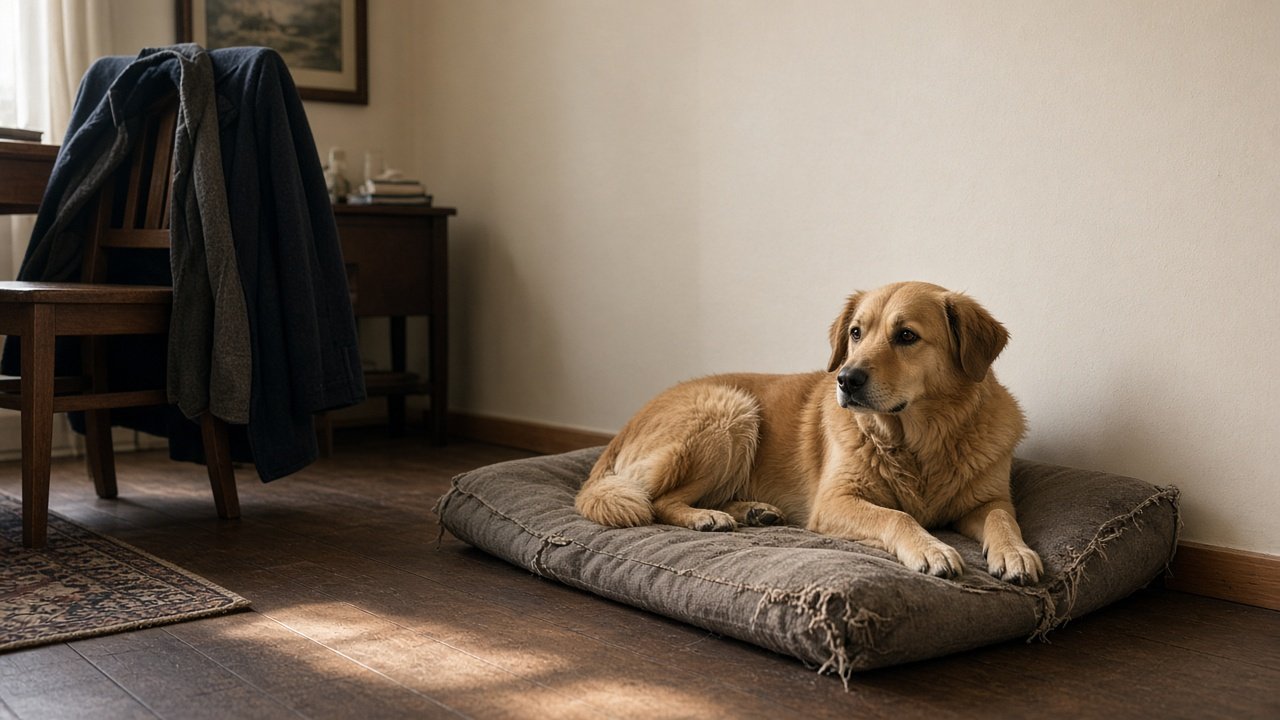
A bed, mat, or folded blanket that already smells like your house is the one object that turns a strange living room into a place the dog can come off the social clock. Put it somewhere out of the main path — the end of a sofa they are allowed on, a corner of the guest room, a spot beside your chair that is not a walkway to the kitchen.
If you are still choosing a bed for home, that is a different page: how to choose a pet bed. For a visit, use the one they already lie on. A new bed in a new house is two new things.
Bring their usual food in the amount you will actually feed, measured at home if you can. Host kibble, leftover roast, and “just a bit of cheese” are how a calm dog becomes a sick dog in a guest bathroom. Bowls can travel; the recipe should not change for a weekend. If you need a bowl that packs, the split between home and travel is on home bowl or travel bowl.
The door is not your door
People in a host house open the front door for cousins, deliveries, and “I’ll just grab that from the car.” A dog who is polite at your place will still bolt toward a new porch. Keep a lead on a hook or a chair back by the door you will actually use. Clip on before anyone opens it, including you.
In Quebec, a dog in a public place must be on a leash no longer than 1.85 m; other provinces and cities write their own rules. A host driveway and a sidewalk in front of the house are not a private living room. Source: Gouvernement du Québec, Encadrement des chiens.
If the host has a dog, do not do the greeting in the doorway. One dog in, settle, then the other, or a parallel walk around the block before anyone shares a room. You cannot see how a hallway introduction will go when coats and boots are in the way.
Their kitchen is not a buffet
Say it once, early, to everyone who will sit down: please do not feed the dog. Children and generous uncles will still try. You can keep the dog out of the kitchen during prep, or on a lead near you, or in the guest room with a chew they already know. Pick one and use it when plates come out.
Trash is a second kitchen. A bag of bones or onion scraps under the sink is a problem if the dog can open the cupboard. Ask where the bin lives and whether it has a lid that stays closed. If it does not, the dog does not get unsupervised time in that room.
If something is eaten that should not have been, call a veterinarian or a poison line. Do not wait for a shop article to sort it. This page will not diagnose and will not publish a list of “safe” host leftovers.
An afternoon is not an overnight
For a few hours, the job is smaller: a mat, a lead, their own water, and a walk before you arrive so they are not exploding into the living room. You can skip a full food shipment if you will be home for the next meal.
For a night, add the bed, the morning walk plan, and a place they can toilet that is not the host’s rug. Ask about the earliest someone is willing to have the door open. A 5:30 a.m. need in a house that sleeps until nine is your problem to solve with a quiet exit, not theirs to absorb.
A crate the dog already uses can live in the guest room if the host agrees. A crate they only see at the clinic is not a kindness in a strange house. Do not invent a first crate weekend on someone else’s floor.
Leave the house as a guest
Hair on the dark sofa is your lint roller, not their Sunday. Ask for the vacuum if you have left a drift by the door. Take waste bags out to their outdoor bin, or take them home. Do not leave a wet towel on a guest-bath hook as if it were yours.
Thank the host for the specific things that made it work — the closed office, the fenced corner, the dog who stayed in the other room. That is more useful than a general “they were so good.”
If the visit went poorly, say so on the drive home and do not repeat the same setup at Christmas. A dog who could not settle is information, not a moral failure. Next time might be a shorter stay, a sitter, or a walk-only visit on the porch.
When the trip is actually a trip
Two nights in a town an hour away is still a visit. Four days across provinces is a road trip. The second one needs water stops, a packing list, and a car plan that this page will not write. Use the road-trip guide and, for how the dog is held, dog car travel in Canada.
A building with no elevator and a long hallway is closer to apartment logistics than to a house visit. If that is the host, living with a pet in an apartment is the closer note for elevators and shared entries. You still bring the bed and the lead.